
Popular articles



If you've seen headlines about people betting millions on election outcomes, World Cup winners, or even nuclear weapon odds — and winning — you've likely stumbled across Polymarket. It's not a sports book. It's not a casino. It's something newer, more interesting, and considerably more controversial: a prediction market.
In 2026, Polymarket is the biggest prediction market platform on the planet, handling over $10 billion in monthly trading volume at its peak, attracting scrutiny from U.S. senators, and reportedly eyeing a valuation of $15 billion. Here's everything you need to know.
What Is Polymarket?
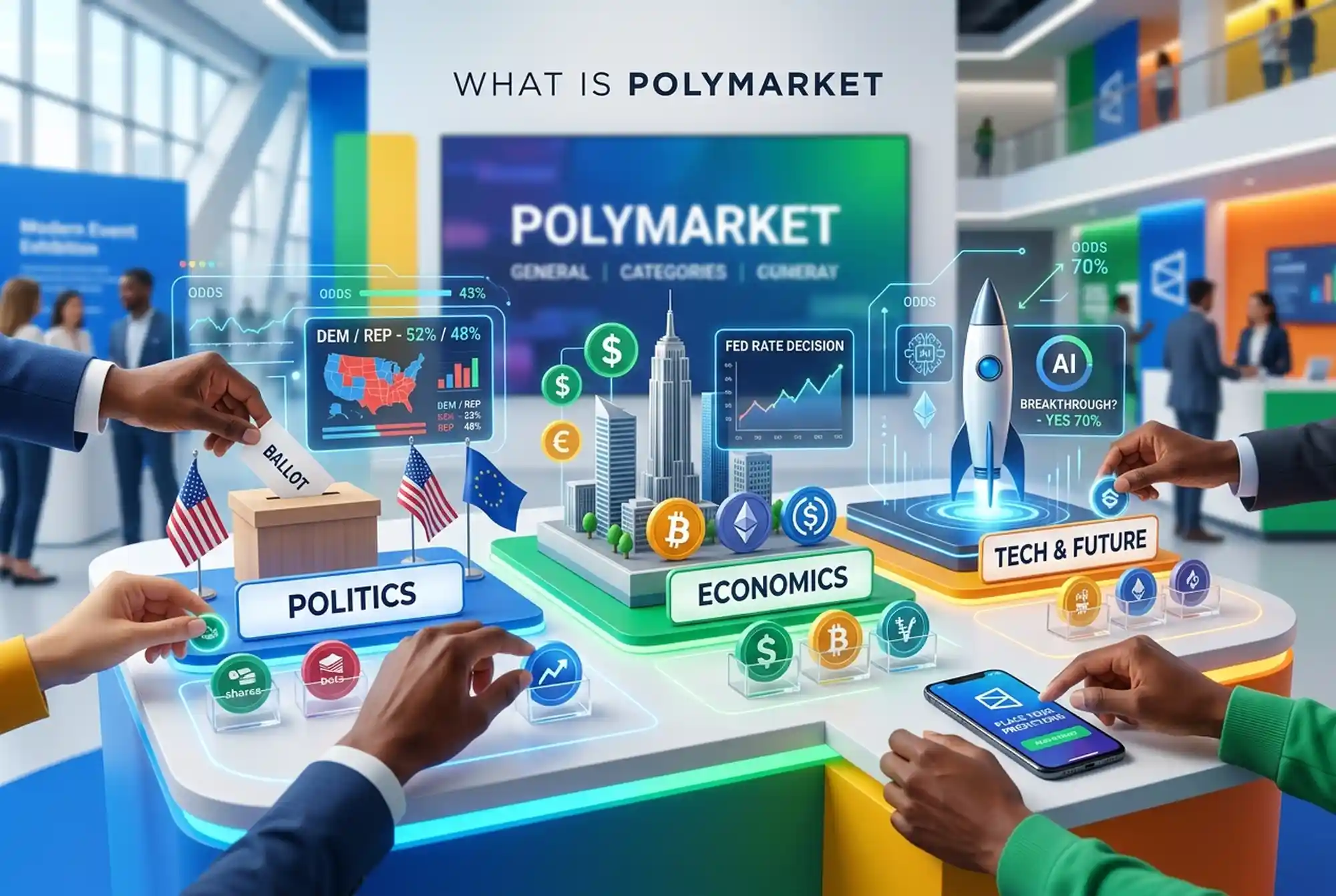
Polymarket is a decentralized prediction market platform where users trade on the outcomes of real-world events. Think of it as a stock market — but instead of company shares, you're buying contracts tied to yes/no questions like:
- Will France win the 2026 FIFA World Cup?
- Will the Federal Reserve cut rates before December?
- Will a particular bill pass Congress this year?
Founded in 2020 by Shayne Coplan, Polymarket operates on the Polygon blockchain (an Ethereum Layer 2 network), which keeps transaction fees extremely low — typically under $0.01 per trade.
The platform is non-custodial, meaning users hold their own funds via a crypto wallet. Settlement is handled by the UMA Optimistic Oracle, a decentralized system that resolves markets transparently and without a central authority making the final call.
How Does Polymarket Actually Work?
Every market on Polymarket is structured as a binary question with two possible outcomes: YES or NO.
Here's the core mechanic:
- Shares are priced between $0.00 and $1.00
- The price reflects the crowd's estimated probability of that outcome occurring
- A share trading at $0.70 means the market collectively believes there's a 70% chance the event happens
- If your prediction is correct, each winning share pays out $1.00
- If you're wrong, the share pays $0
Example: You believe a particular candidate will win an election. You buy 1,000 YES shares at $0.55 each (spending $550). If they win, you collect $1,000 — a profit of $450. If they lose, you lose your $550.
The beauty of this system is that prices shift in real time as new information enters the market. A breaking news story, a leaked poll, a surprise announcement — all of it moves the market instantly, making Polymarket prices some of the most watched real-time probability gauges in the world.
What Can You Trade on Polymarket?
Polymarket covers an enormous range of event categories:
- Sports: ~39%
- Politics: ~30%
- Cryptocurrency: ~20%
- Finance, weather, entertainment: ~11%
During the 2026 FIFA World Cup, the World Cup Winner market alone accumulated over $4.25 billion in cumulative trading volume — making it one of the largest single prediction markets ever run anywhere.
Beyond sports, notable markets have included:
- U.S. presidential elections (Polymarket became the go-to probability gauge in 2024)
- Federal Reserve rate decisions
- Supreme Court rulings
- Geopolitical events (military operations, diplomatic deals)
- Celebrity news and entertainment awards
Polymarket in 2026: Growth, Funding & Big Numbers
Polymarket's 2026 trajectory has been remarkable by any measure.
Trading volume milestones:
- March 2026: $10.5 billion monthly volume (peak at the time)
- April 2026: $10.3 billion globally (combining international + new U.S. platform)
- June 2026: $10.8 billion — an all-time record, driven heavily by World Cup betting
The U.S. expansion: After years of being unavailable to American users due to regulatory constraints, Polymarket launched a domestic U.S. platform in 2026. Within 30 days of launch, it saw 86% growth in new users and 73% growth in active traders — numbers that signal enormous pent-up demand.
Funding and valuation: As of April 2026, Polymarket was in talks to raise $400 million at a $15 billion valuation — up from $9 billion after the Intercontinental Exchange (ICE, the parent of the NYSE) took a stake in October 2025. A potential public listing is also reportedly being explored.
The team is scaling up: Key hires include:
- Travis VanderZanden (Bird scooters founder) as Chief Growth Officer
- Megan McGrath (formerly Robinhood) as Chief Compliance Officer
- Natalie Oblazny (formerly Coinbase) as Head of Regulatory Affairs
- Shana Bautista (former FBI official, ex-Coinbase) as Global Head of Investigations
The compliance-heavy hiring tells its own story: Polymarket is preparing for a serious regulatory environment.
Is Polymarket Legal? The Regulatory Picture
This is where things get complicated — and frankly, messy.
In the United States
Polymarket originally ran afoul of U.S. regulators early on. In 2022, it settled allegations with the Commodity Futures Trading Commission (CFTC) for operating an unregistered binary options exchange, paying a $1.4 million penalty. U.S. users were subsequently blocked from the platform.
In 2026, with the launch of its U.S. domestic platform, Polymarket re-entered the American market with a compliance-first approach — bringing on regulators-turned-executives and introducing insider-trading safeguards in March 2026 following pressure from lawmakers.
That said, U.S. senators have called for a federal investigation into the platform, and the CFTC scrutiny has not entirely disappeared.
Around the World
Polymarket's global legal standing is a patchwork:
- 🇦🇷 Argentina — Banned nationwide in March 2026, citing illegal gambling laws
- 🇨🇭 Switzerland — Blocked under gaming regulations
- 🇵🇱 Poland — Blocked under gaming regulations
- 🇸🇬 Singapore — Blocked under gaming regulations
- 🇧🇪 Belgium — Blocked under gaming regulations
The core legal question comes down to one distinction: is it gambling or is it a financial instrument? Prediction markets like Polymarket argue they are information markets — tools for aggregating crowd wisdom about future events, not games of chance. Critics and regulators in several jurisdictions disagree.
The Controversies: What Critics Get Right
Polymarket's explosive growth hasn't come without serious problems.
Deceptive Marketing (June 2026)
The Wall Street Journal reported that Polymarket paid online content creators to produce videos falsely showing customer wins totaling $1.9 million. The videos featured fabricated trades on dummy sites designed to look like the real platform — including a phony $100,000 win on a Trump statement prediction. Polymarket subsequently revised its promotional guidelines and restructured its marketing team.
Insider Trading
In May 2026, a Google employee was found to have profited over $1.2 million on Polymarket by using confidential business information to trade. Separately, a data analyst published findings suggesting multiple accounts had won millions by betting on U.S. military operations with a suspiciously high success rate — raising concerns about information leakage at the highest levels.
In response, Polymarket rolled out insider-trading safeguards in March 2026, though critics argue enforcement remains difficult on a pseudonymous blockchain platform.
Market Manipulation
A $7+ million market on the "Ukraine-Trump mineral deal" resolved as YES despite no official confirmation of such a deal — prompting allegations that the market was manipulated or settled incorrectly.
Journalist Harassment
Large bettors allegedly harassed and threatened an Israeli journalist over his reporting on Iranian missile strikes — reporting that was moving their positions. Polymarket banned the involved accounts, but the incident highlighted how high-stakes trading can create dangerous incentives around information control.
Polymarket vs. Kalshi: What's the Difference?
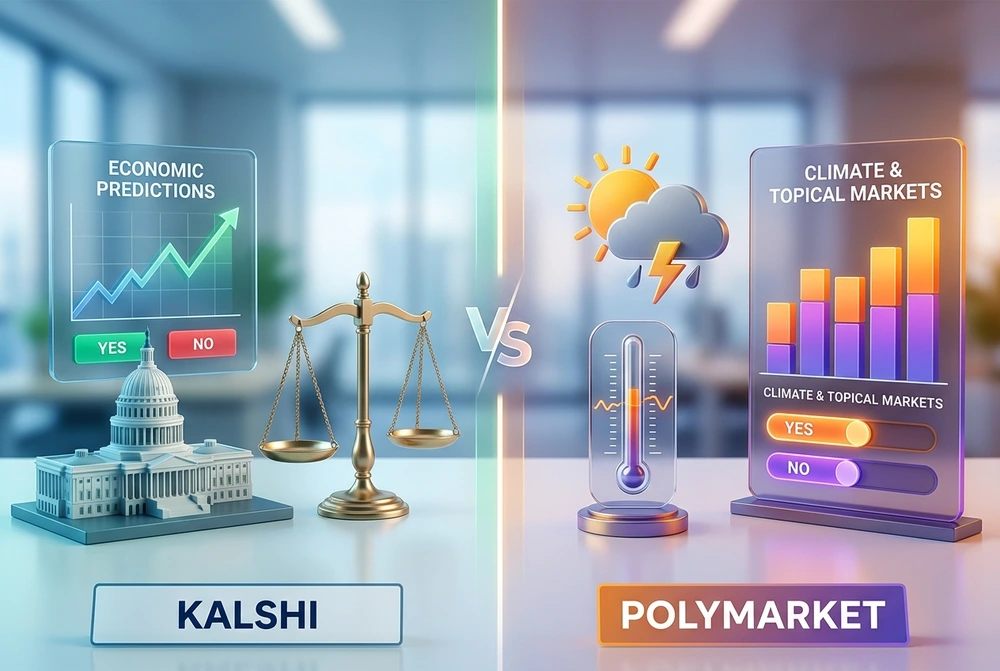
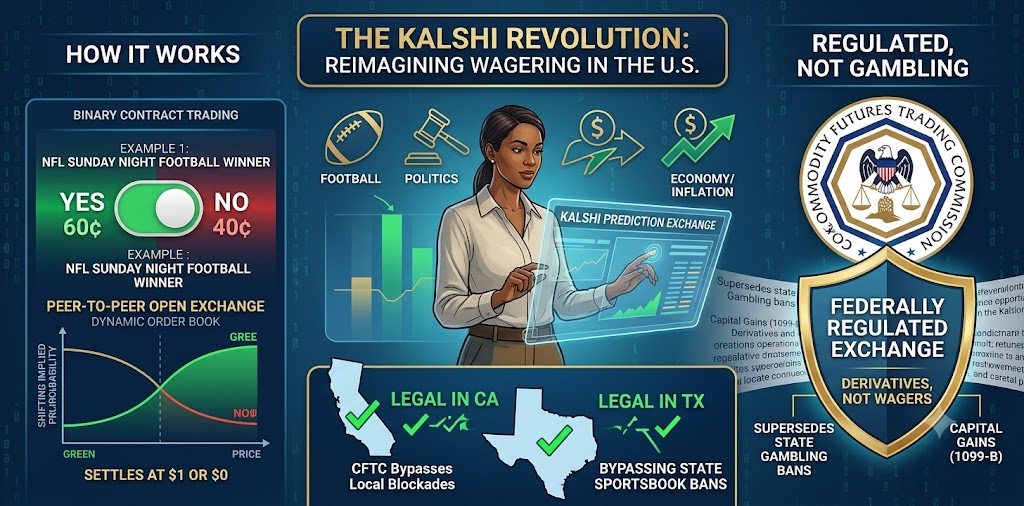
Polymarket isn't the only prediction market out there. Kalshi is its closest U.S.-based competitor — and there are meaningful differences:
For users who prioritize volume and breadth, Polymarket wins. For users who want full regulatory clarity and don't mind KYC, Kalshi is the safer choice.
Who Actually Uses Polymarket?
A July 2026 Pew Research study of 11,989 Polymarket accounts found the typical user:
- Executes 46 trades across their account history
- Is active across roughly 10 trading days
- Concentrates heavily in sports and political markets
The platform attracts a mix of casual bettors, professional traders treating it as an alpha source, journalists using market prices as a real-time probability signal, and institutional players placing large positions on high-stakes political and financial events.
Polymarket’s Celebrity Power Play: How LeBron James Drives App Store Surge Amid NFL Opener
Why Do Prediction Market Prices Matter?
One reason Polymarket has attracted mainstream attention — beyond the money at stake — is that its prices are genuinely useful as real-time probability signals.
During the 2024 and 2026 election cycles, political analysts, journalists, and campaigns themselves cited Polymarket odds alongside traditional polling. When a market assigns a candidate a 68% chance of winning, that number reflects thousands of traders putting actual money behind their beliefs — a stronger signal than an opinion poll, some argue.
The same logic applies to financial markets: when Polymarket traders set the odds of a Fed rate cut at 80%, traders in traditional markets pay attention.
This "wisdom of crowds" effect is the core intellectual argument for prediction markets — and it's why economists have advocated for them for decades.
What's Next for Polymarket?
Several storylines will define Polymarket's trajectory through the rest of 2026 and into 2027:
- The funding round — A $400M raise at $15B would cement Polymarket as one of the most valuable fintech companies in the world. A potential IPO would follow.
- U.S. regulatory clarity — Whether Congress or the CFTC moves to formally regulate or restrict prediction markets will determine how far the U.S. platform can grow.
- The insider trading problem — As more money flows through the platform, the incentive to exploit information asymmetry grows. Whether Polymarket's safeguards can keep pace is an open question.
- Global expansion vs. bans — Each new country ban narrows the addressable market; each regulatory approval opens it wider.
The Bottom Line
Polymarket is simultaneously a genuine financial innovation, a multi-billion-dollar market infrastructure, and a regulatory lightning rod. It has made real-time crowd-sourced probability part of how journalists, analysts, and traders think about uncertain events — and it's done so at a scale that would have seemed implausible five years ago.
Whether it's gambling dressed up as finance, or a legitimate information market the world needs, probably depends on who you ask. What isn't in dispute is the scale: $10 billion a month in volume, a $15 billion valuation, and a compliance team that reads like a government agency in waiting.
The market on "will Polymarket still exist in five years?" would probably price quite high right now.
Subscribe to unlock premium content
Sed at tellus, pharetra lacus, aenean risus non nisl ultricies commodo diam aliquet arcu enim eu leo porttitor habitasse adipiscing porttitor varius ultricies facilisis viverra lacus neque.