
Popular articles

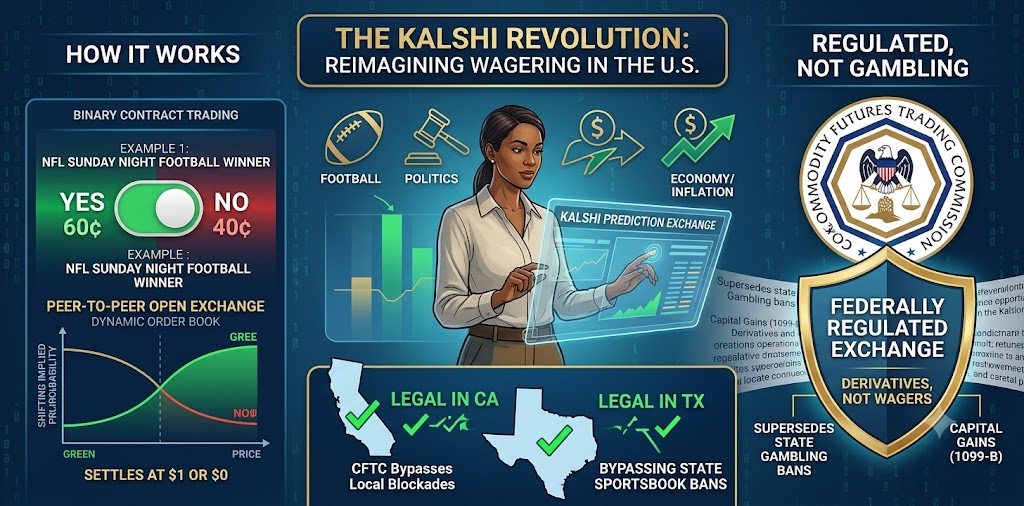


Prediction markets have exploded from a niche curiosity to a $24 billion-per-month financial phenomenon. In 2025 alone, over 800,000 unique traders placed bets not on sports teams or card games — but on election outcomes, Federal Reserve decisions, AI model launches, and the price of Bitcoin at year-end.
So what exactly is a prediction market? How does it work? And should you be trading on one?
This guide breaks it all down from scratch — no prior finance knowledge required.
What Is a Prediction Market?
A prediction market is an exchange where people buy and sell contracts tied to the outcome of real-world events.
Think of it like a stock market, except instead of buying shares of Apple or Tesla, you're buying a contract that asks: "Will the Federal Reserve cut interest rates before December 2026?" or "Will Anthropic release a new Claude model this quarter?"
If you're right, your contract pays out. If you're wrong, it expires worthless.
The price of each contract — which ranges from $0 to $1 — reflects the market's collective probability estimate for that event. A contract trading at $0.70 means traders collectively believe there's roughly a 70% chance the event will happen.
This is what makes prediction markets genuinely useful: they're not just gambling. They aggregate information from thousands of traders into a single, real-time probability — often more accurate than expert forecasts or polls.
How Prediction Markets Work: The Mechanics
Binary Contracts
Most prediction market contracts are binary — they resolve to either $1.00 (event happened) or $0.00 (event didn't happen).
Here's a simple example:
Market: "Will the Kansas City Chiefs win Super Bowl LXI?"
Contract price: $0.35
What it means: The market believes there's a 35% chance the Chiefs win.
If you buy 100 contracts at $0.35 each, you spend $35. If the Chiefs win, your contracts each pay $1.00 — netting you $65 profit. If they lose, you lose your $35.
Order Books — The Same System as Wall Street
Major prediction market platforms like Kalshi and Polymarket use a Central Limit Order Book (CLOB) — the exact same matching system used by the New York Stock Exchange and Nasdaq.
An order book shows two sides:
- Buy orders (bids): The highest price buyers are willing to pay
- Sell orders (asks): The lowest price sellers are willing to accept
When a buyer's bid matches a seller's ask, a trade executes automatically. You're never trading against the platform — you're trading peer-to-peer with other users.
You Don't Have to Hold Until Resolution
One of the most misunderstood features: you can exit your position at any time.
Say you buy a contract at $0.40 and new information pushes the price to $0.65. You can sell right now and pocket the $0.25 difference per contract — without waiting to see how the event turns out. This makes prediction markets much more flexible than they look at first glance.
How Contracts Resolve
When the event's deadline arrives, the market resolves:
- An oracle (an independent data source or dispute resolution system) verifies the outcome
- Winning contracts automatically pay $1.00 each
- Losing contracts expire at $0.00
- Settlement happens instantly
Polymarket uses UMA Protocol's Optimistic Oracle for this — a decentralized dispute resolution system. Kalshi uses its own internal resolution process, overseen by the CFTC.
The Major Prediction Market Platforms in 2026
Not all prediction markets are the same. Here's how the four biggest players stack up:
Kalshi
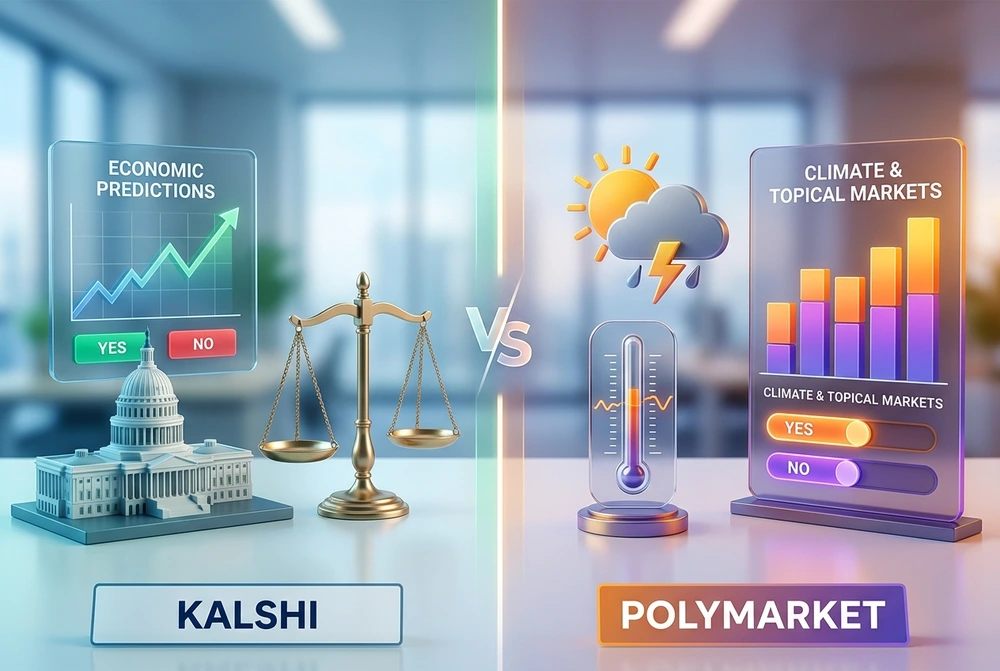
Kalshi is the most prominent fully CFTC-regulated prediction exchange in the United States. It operates like a licensed financial exchange, accepts direct USD deposits, and is available to US residents in most states. Because it's federally regulated, it has the strongest legal standing of any platform — a federal court affirmed in April 2026 that Kalshi's CFTC registration likely preempts state gambling laws.
Best for: US-based traders who want a regulated, legally clear environment.
Polymarket
Polymarket is the largest prediction market by volume — hitting over $24 billion in monthly trading volume in April 2026. It runs on the Polygon blockchain and settles in USDC (a USD-pegged stablecoin). Because it's decentralized and crypto-based, it's accessible globally but operates without CFTC registration.
Best for: Traders who want maximum liquidity and the widest range of markets. Requires a crypto wallet.
PredictIt
PredictIt is an older, academic-focused platform that pioneered political prediction markets in the US. It operates under a CFTC no-action letter (legacy protection), but its fee structure is brutal for active traders — a 10% commission on profits plus a 5% withdrawal fee can eat over 14% of your winnings.
Best for: Political researchers and casual political forecasters.
Manifold Markets
Manifold uses entirely play-money (virtual currency called "mana"), so no real funds are at stake. It's an excellent place to learn the mechanics of prediction markets, practice your forecasting, and engage with a community of forecasters — without financial risk.
Best for: Beginners who want to learn before risking real money.
What Do People Trade On?
The range of prediction market contracts is wider than most people expect. As of 2026, the major categories are:
Sports (Largest by Volume)
Sports contracts dominate — making up roughly 80% of Kalshi's volume and 39% of Polymarket's. The 2026 FIFA World Cup alone generated over $3 billion in trading volume. You'll find markets on NFL game winners, tournament brackets, player awards, and more.
Politics
Political markets are where prediction markets first made their name. With over 1,700 active political markets and $3.3 billion in total volume on Polymarket alone as of mid-2026, elections, legislation, and leadership contests attract some of the most sophisticated forecasters on the platforms.
Economics & Finance
Federal Reserve rate decisions, CPI prints, recession probabilities, employment numbers — economic markets attract professional traders and financial analysts who use them for hedging and information gathering.
AI & Technology
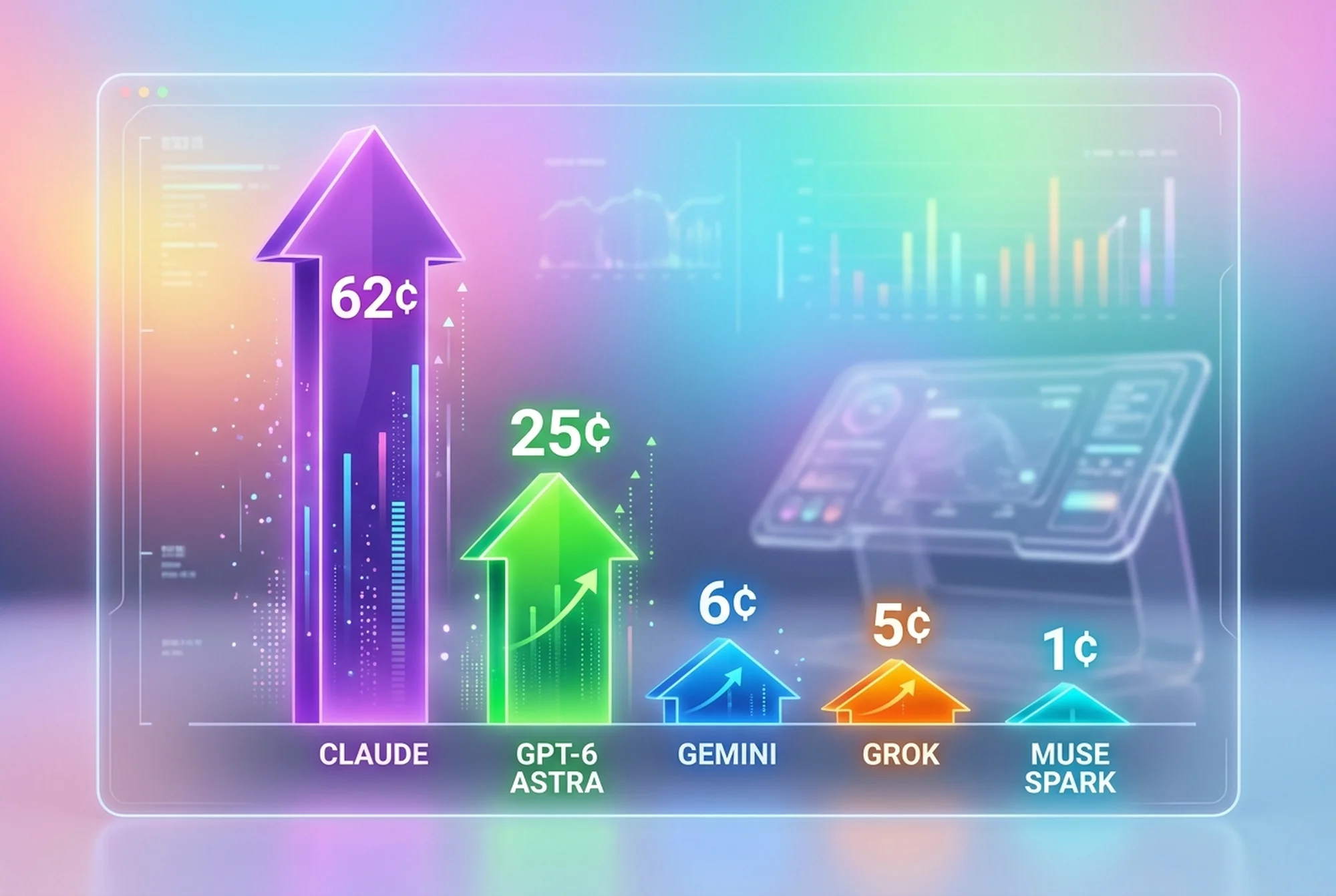
The fastest-growing category in 2026. With nearly 600 active technology markets on Polymarket, traders are betting on AI model releases, SpaceX milestones, product launches, and which AI company will lead various benchmarks. (Full disclosure: there are active markets on which AI model will dominate by year-end — Claude currently leads on Kalshi at 62¢ as of September 2026.)
Other Markets
Crypto prices, geopolitical events, weather outcomes, cultural moments — the range keeps expanding. If it has an objectively verifiable outcome, it can become a prediction market contract.
Are Prediction Markets Legal?
This is the most common question beginners ask — and the honest answer is: it depends on the platform and where you live.
At the Federal Level: Yes, with CFTC Oversight
Prediction markets structured as financial derivatives are legal under federal law and regulated by the Commodity Futures Trading Commission (CFTC). The CFTC classifies prediction contracts as "event contracts" — a recognized category of financial instrument.
Kalshi is the most prominent CFTC-registered exchange. In June 2026, the CFTC proposed additional rules clarifying public interest requirements for event contracts — further cementing the federal regulatory framework.
The State-Level Fight
Here's the complication: more than 10 US states have challenged prediction markets as illegal gambling, leading to a patchwork of legal disputes throughout 2025–2026. The most notable example is Massachusetts, which issued a preliminary injunction in January 2026 requiring Kalshi to stop offering sports contracts in the state.
Federal courts have been broadly sympathetic to prediction market platforms, with courts recognizing that CFTC regulation likely preempts state gambling laws. But the legal landscape is still evolving state by state.
Platform Risk Summary
- Kalshi: Strongest legal position — CFTC-regulated, winning in federal courts
- Polymarket: Higher regulatory risk — no CFTC registration, primarily accessible to non-US users
- PredictIt: Legacy protection that hasn't been tested in modern courts
- Manifold: No risk — no real money involved
Bottom line: If you're in the US and want the clearest legal standing, use a CFTC-regulated platform like Kalshi. Always check your state's current status before depositing real money.
Can You Actually Make Money?
Honestly? It's harder than it looks — and the data backs that up.
The Uncomfortable Statistics
A 2026 study found that the top 1% of traders capture 76% of total profits on prediction markets. Retail traders who pick winners 51.3% of the time — slightly better than a coin flip — still lose money overall once fees are factored in.
More striking: research published in 2026 found that only 3% of traders drive the market's price accuracy, not the crowd as a whole. The "wisdom of the crowd" story prediction markets tell about themselves is partly a myth — it's really the wisdom of a small number of highly skilled analysts.
Where the Edge Comes From
Profitable prediction market traders typically have one or more of:
- Domain expertise — deep knowledge of a specific sport, political system, or economic indicator
- Information advantages — faster access to relevant data than other traders
- Calibration skills — an unusually good sense of probability estimation
- Automated systems — algorithmic traders who exploit pricing inefficiencies
The Upside for Beginners
None of that means you can't profit — it means you should be honest about where your edge is before putting significant money in. The risk profile is clear: your maximum loss is whatever you paid for the contracts. You can't lose more than you invest, and you can always exit early if the market moves against you.
Start with Manifold (play money) to calibrate your forecasting before committing real funds. When you do go real-money, start small and focus on markets where you have genuine knowledge others don't.
Key Terms Every Beginner Should Know
Binary contract — A contract that resolves to either $1 (yes) or $0 (no).
Order book — The live list of buy and sell orders on a market, showing current prices and quantities.
Resolution — When a market officially closes and winners are determined.
Oracle — An independent system or party that verifies real-world outcomes for contract settlement.
CFTC — The Commodity Futures Trading Commission, the US federal regulator that oversees prediction markets structured as financial derivatives.
Event contract — The CFTC's term for prediction market contracts — binary contracts tied to the outcome of real-world events.
Liquidity — How easy it is to buy or sell contracts at a given price. High liquidity = tighter spreads, easier trading.
USDC — A USD-pegged stablecoin used for trading on Polymarket and other crypto-based prediction markets.
Prediction Markets vs. Sports Betting: What's the Difference?
This question comes up constantly. Here's the short version:
The key structural difference: prediction markets are peer-to-peer. You're trading against other people, not against a house that always wins. The platform takes a small fee, but it's not structurally trying to beat you the way a sportsbook is.
Getting Started: A Simple First Step
- Sign up for Manifold Markets (free, no real money) and trade a few markets to see how contracts behave before anything is at stake.
- Follow active political or AI markets on Polymarket — you don't need an account to read prices and track how they move in response to news.
- Read the Kalshi FAQ to understand the regulated US framework before depositing.
- Start small when you go real-money — $20–$50 in a topic you know deeply is a better education than $500 across random markets.
Frequently Asked Questions
What is the minimum amount I can trade on prediction markets?
On Kalshi, you can trade a single contract at whatever the current price is — often as low as a few cents. On Polymarket, minimums vary by market but are typically just a few dollars.
Do I pay taxes on prediction market winnings?
In the US, winnings from CFTC-regulated prediction markets are likely treated as capital gains or ordinary income. This is an evolving area — consult a tax professional for your specific situation. (We cover this in detail in our dedicated guide: Is Prediction Market Income Taxable?)
What happens if a market can't resolve?
Markets typically have clear resolution criteria set at launch. If an event is ambiguous or unresolvable, platforms have dispute resolution processes. Kalshi uses internal review; Polymarket uses UMA's Optimistic Oracle dispute system.
Is Polymarket available in the US?
Polymarket's terms of service restrict US users due to its unregistered status with the CFTC. Many US users access it anyway via crypto wallets, but doing so carries regulatory risk. Kalshi is the recommended option for US traders seeking legal clarity.
Are prediction markets the same as gambling?
Legally, no — at the federal level, CFTC-regulated prediction markets are classified as financial derivatives, not gambling. Culturally, the line is blurry. The core distinction is structural: prediction markets use order books, resolve against verified real-world data, and operate peer-to-peer.
The Bottom Line
Prediction markets are one of the most genuinely interesting financial innovations of the past decade. They turn collective knowledge into real-time probability estimates — and in many cases, they're more accurate than polls, expert forecasts, and traditional analysis.
For traders, they offer access to markets that didn't exist five years ago: politics, AI milestones, Fed decisions, climate events. For observers, they're a live dashboard of what informed people actually believe will happen.
The learning curve is real, the competition is stiff at the top, and the legal landscape is still evolving — but the fundamentals are straightforward. And right now, while the space is still growing, the content and information gap around prediction markets is enormous. That means more opportunity for well-informed newcomers than most established financial markets offer.
Want to go deeper? Read our related guides:
Subscribe to unlock premium content
Sed at tellus, pharetra lacus, aenean risus non nisl ultricies commodo diam aliquet arcu enim eu leo porttitor habitasse adipiscing porttitor varius ultricies facilisis viverra lacus neque.